- Today
Plan the Sequence, Not the Lesson: How to Get Your Evenings Back
- The Food & Nutrition Academy
Six classes, three practicals, and tomorrow's lesson still unwritten
It is Sunday evening, and you are still building tomorrow's lesson from scratch: the slides, the worksheet, the recipe adapted for thirty students. Much of that pressure comes from planning one lesson at a time, where every lesson costs you an evening. If you did not train in Food, or you are the only specialist in the building, it weighs even more.
Here is the thing worth noticing. Most planning time does not go on thinking. It goes on making. The thinking is the part only you can do, because only you know your class. The aim is to protect it.
The golden nugget: today's exit ticket is tomorrow's starter
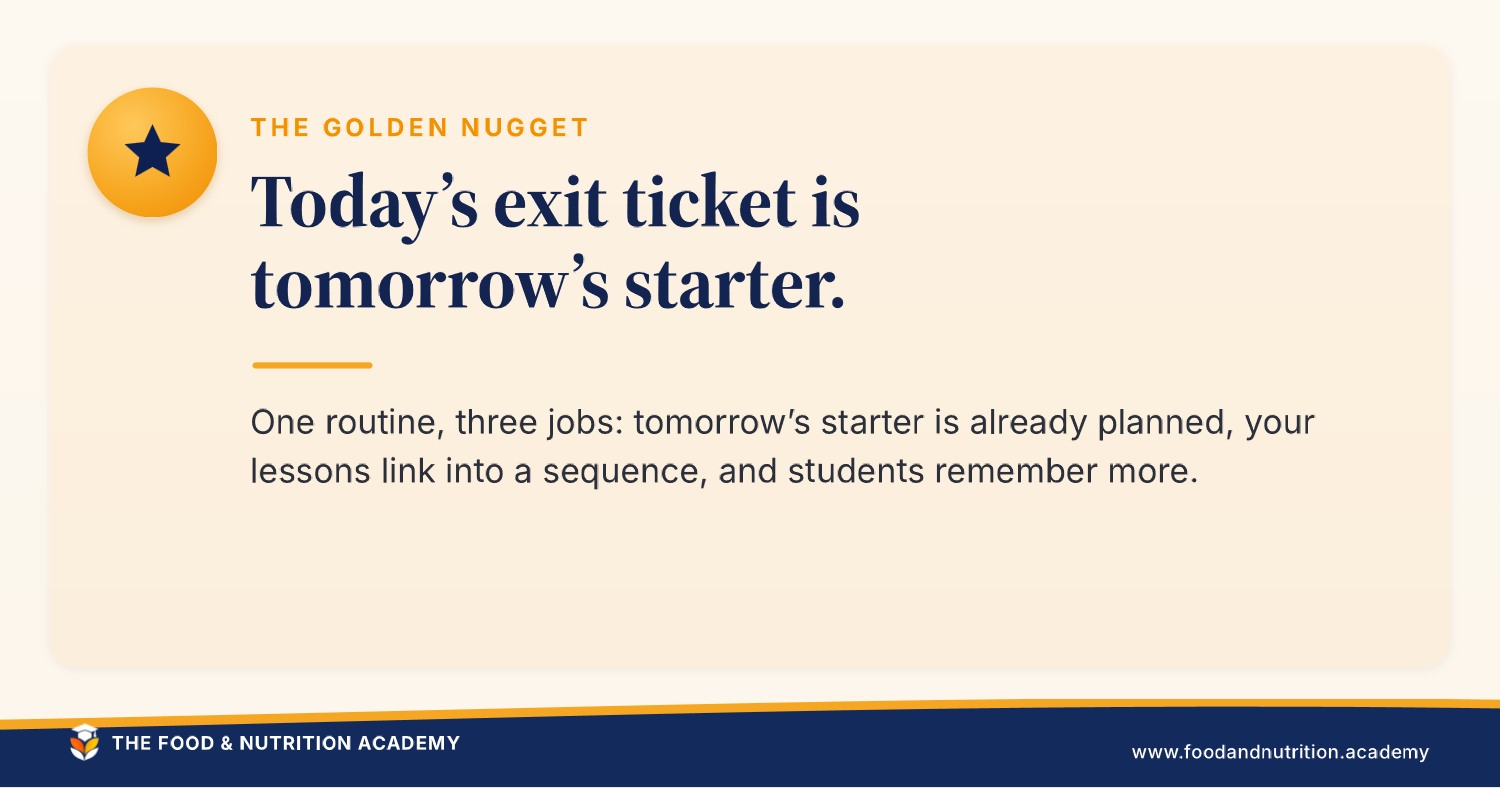
End every lesson with a short exit ticket: two or three questions on what students have just learned. Then open the next lesson with those same questions, or questions built from them.
That one routine does three jobs at once:
It saves planning. Tomorrow's starter is already written before you leave the room.
It links your lessons. Each lesson recalls the last and prepares for the next, so you stop inventing and start adjusting.
It helps students remember. The ideas keep coming back, so they stick.
Picture a Year 7 lesson on nutrients. The exit ticket asks students to name two sources of protein and one job protein does in the body. Next lesson, those same questions are on the board as students walk in. The answers you saw on the exit tickets also tell you exactly what to revisit first.
How to make it work in three steps
1. Read the whole year first
Before you plan a single lesson, read the whole year. Know what students arrive with, where each module leads and which practical closes it. Once you can see the journey, every lesson makes sense, and you can explain your curriculum to anyone who asks. For a non-specialist, this is the most reassuring hour you can spend.
2. Give every lesson the same shape
Try a quick test in your department. Pick three lessons from three different teachers and compare their structure. If every lesson is shaped differently, students spend the opening minutes working out what is expected rather than learning.
A consistent shape removes that load:
A starter that recalls the last lesson (yesterday's exit ticket).
A clear Learning Objective, with separate Success Criteria.
Activities that build towards them.
An exit ticket that feeds the next lesson.
When the shape is familiar, the thinking goes into the food science and the skills.
3. Spend your time thinking, not making
When a lesson already exists, your planning becomes one decision: what does this group need from it? You might adapt the recipe, change the challenge or add support. That is the professional judgement only you can make, and it takes minutes, not an evening.
What a professional kitchen teaches us
A professional kitchen does not invent a new menu every night. It runs on a set menu, prep lists and a familiar order of service, so the team's energy goes into quality and adjustment, not reinvention. A well-sequenced course does the same for a Food department.
Not only for Food
The exit-ticket-to-starter routine works in any subject: science, maths, history, languages. A consistent lesson shape is something a whole school can share, and students feel the difference when every room works the same way.
Try this tomorrow
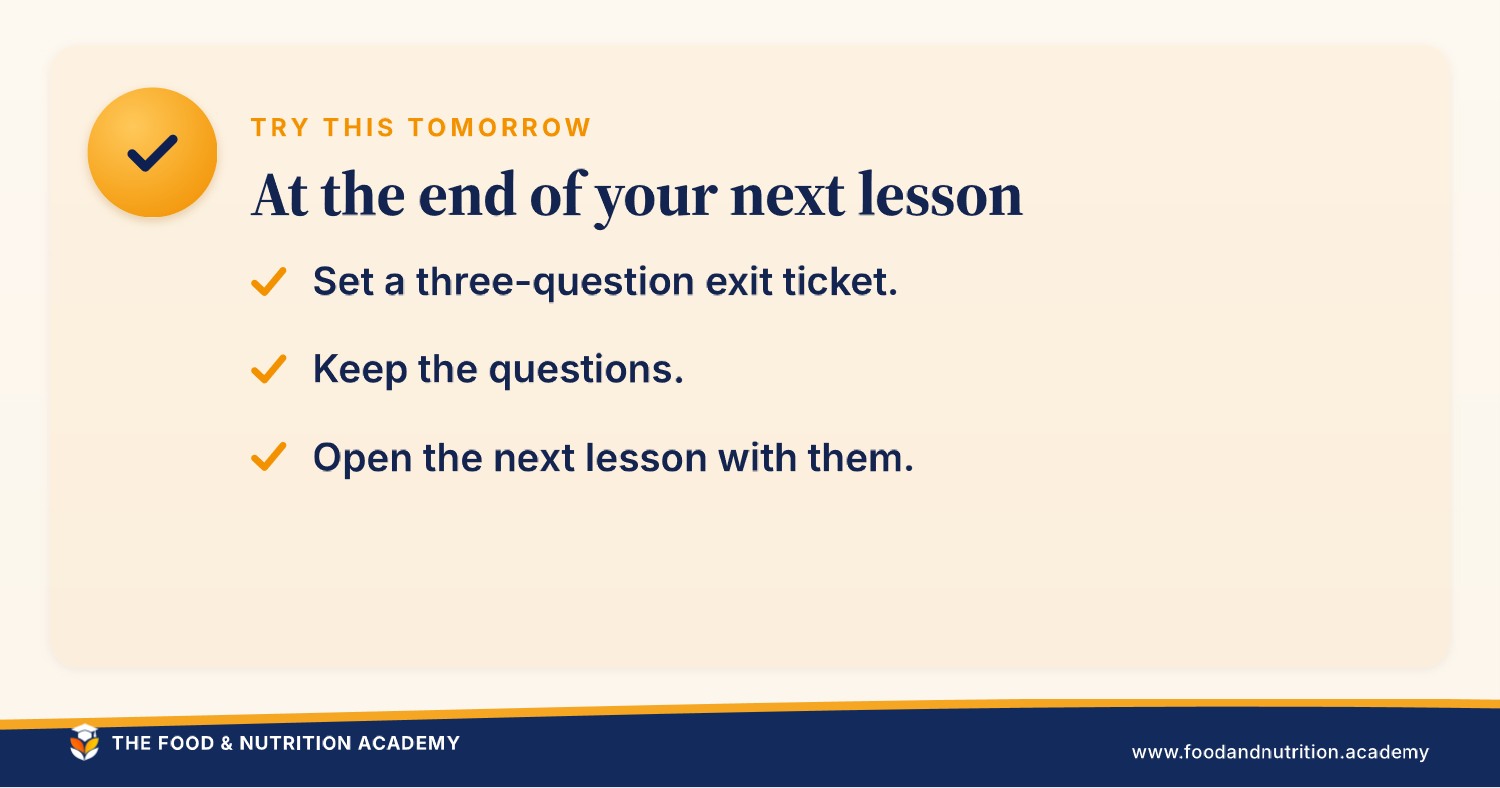
At the end of your next lesson, set a three-question exit ticket. Keep the questions, and open the following lesson with them. That is one starter you will never have to plan again.
This is how Food Curriculum Academy courses are built, from Year 7 to GCSE: every lesson opens with recall and ends by preparing for the next.
You can watch the short video on this idea here: Watch the video on YouTube
Listen on your drive in
Prefer to listen? This week's episode of The Practical Classroom podcast talks through the same idea in a few minutes, ready for your drive to school. Listen on Spotify, or search for The Practical Classroom on YouTube Music.
Would you like each week's idea in your inbox? Read The Practical Classroom newsletter on Substack.
A guide for the rest of your school year
Getting your evenings back is one of the simplest ways to look after yourself in a demanding job. Small, manageable changes to your working week can make a real difference.
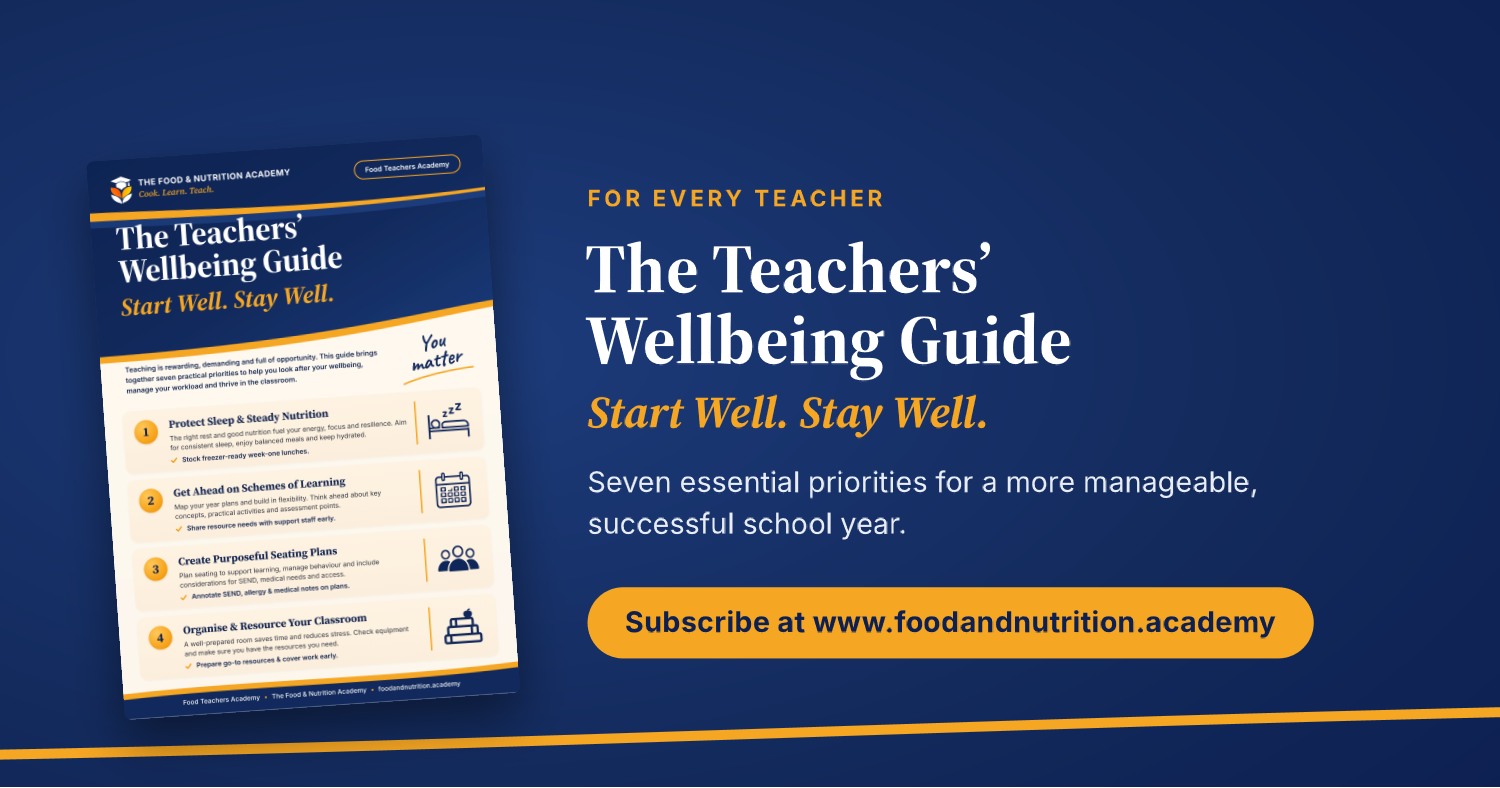
The Teachers' Wellbeing Guide: Start Well. Stay Well. sets out seven essential priorities for a more manageable, successful school year, including getting ahead on your schemes of learning. It was written by a Food and Nutrition teacher who knows the classroom. Subscribe at www.foodandnutrition.academy to receive your copy, along with practical ideas like this one.